Pumpkin banana bread has a major problem: It’s hard to get both flavors to come through without messing up the texture. Just adding more of both can turn the loaf to mush. But I’ve found a way to get plenty of banana and pumpkin flavor in a moist, tender loaf (with no extra effort or ingredients).
Jump to the recipe if you’re ready to go. Or read on for more info on what this loaf is like + how I’ve maximized both pumpkin and banana flavor in it.
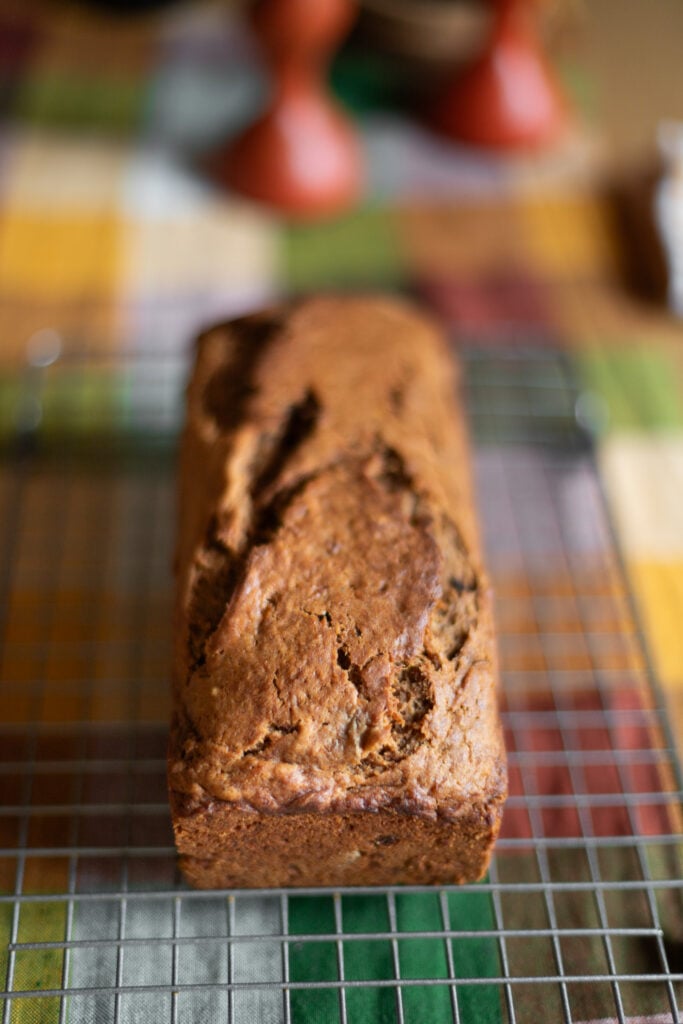
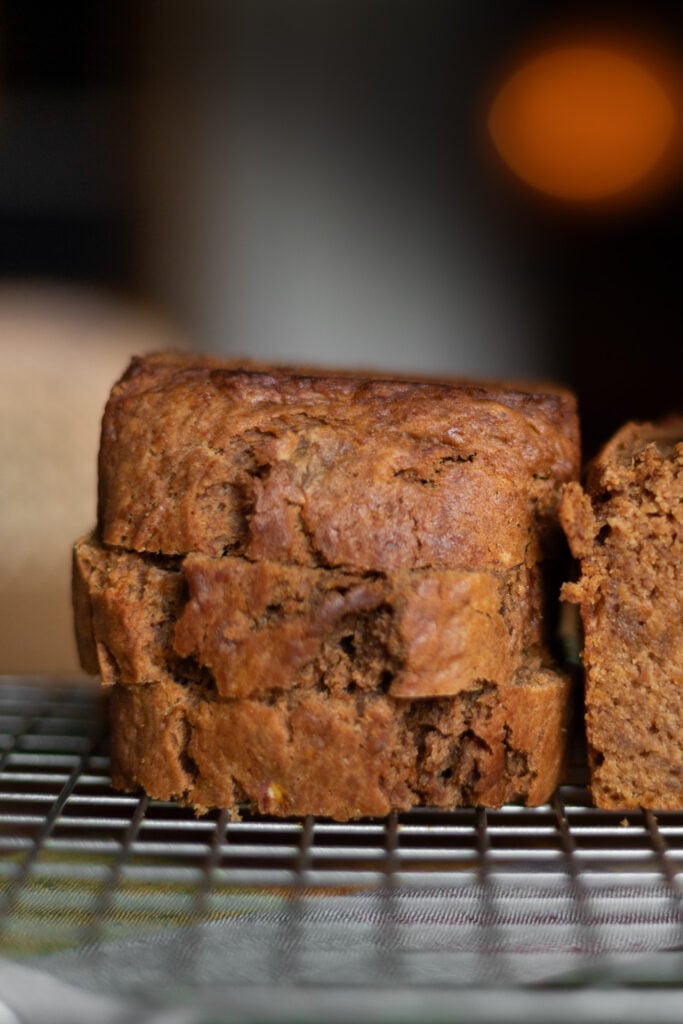
What’s this pumpkin banana bread like?
Here are its specs:
- It’s pumpkin-spiced (but not, like, over-spiced). If you have readymade pumpkin spice, you can use that, or you can make your own with a few simple ingredients. The recipe has you covered either way.
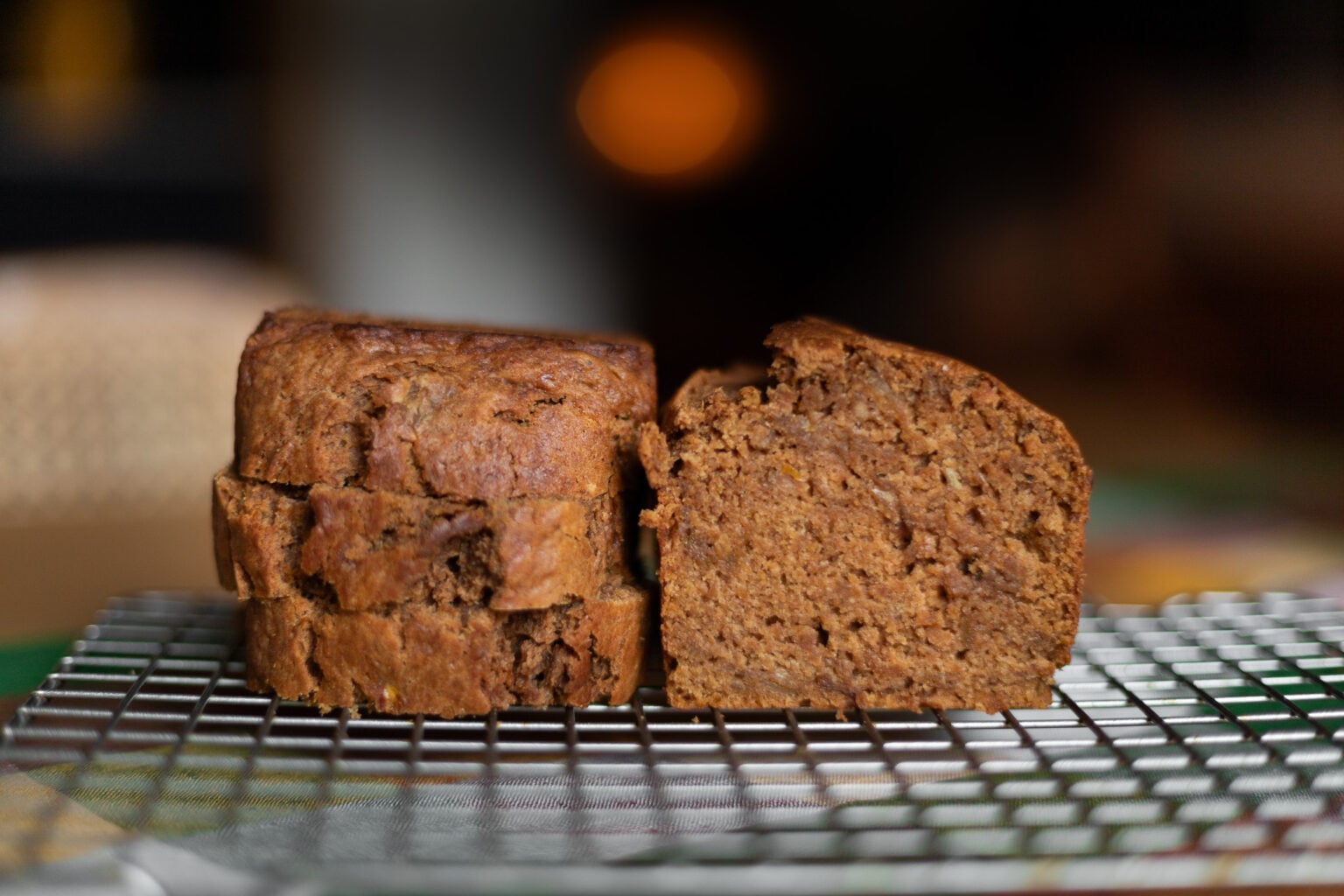
- It’s moist and tender, with a cake-like crumb. I wouldn’t call it light and fluffy—it’s got a classic banana bread or pumpkin bread texture.
- You can use store-bought or home-made purée. And it can be either pumpkin or a similar firm-fleshed squash (e.g., butternut).
- It just happens to be vegan. Like, 100% coincidentally, and aren’t those the best vegan recipes? Its lack of animal products is not a bug, it’s a feature. Eggs, milk, sour cream, etc. would all water down the pumpkin banana flavor we’re trying to concentrate.
- It’s got a ton of banana and pumpkin flavor. Let’s get into why/how!
How this loaf maximizes both pumpkin and banana flavor
If we took a standard banana bread recipe and simply added a bunch of pumpkin purée to it, it would certainly have enough banana and pumpkin flavor. But it would become a mushy and doughy mess. Okay, so that’s not an option.
But what if we took a standard banana bread recipe and replaced half of the banana with pumpkin? Well, its texture would turn out great. Nice! But it would be lacking in both banana and pumpkin flavor. Bummer. That’s because we’d be including half as much banana as we would in a banana bread loaf and half as much pumpkin as we would in a pumpkin bread loaf. That’s the option most recipes go with. Good, not great.
Here’s my solution:
If you’ve been reading along for a while, you know that I’ve found a way to replace the eggs in banana bread with a tiny bit more flour and a lot more banana. This leads to a loaf with a ton of banana flavor and a lovely, tender texture.
In this pumpkin banana bread recipe, we’re doing the same thing. But this time, it’s making an even bigger difference. Instead of 2 eggs, we’re going to use more banana, more pumpkin, and a little bit more flour (to hold everything together). This recipe essentially has as much banana and pumpkin as is physically possible without sacrificing texture.
But if this recipe doesn’t sound like it’s for you and you’re going to keep looking for the perfect recipe, here’s some free advice: Avoid recipes that include sour cream, milk, applesauce, yogurt, etc. If you want to maximize pumpkin and banana flavor, these ingredients will water it down. Look for a recipe that gets most of its moisture from banana and pumpkin. Like, well… this one!
My top tip: do not over-mix
Before I get to the recipe, one quick tip: Do not over-mix! This is important advice for any quick bread. But it’s particularly important when we’re omitting the eggs and adding extra flour as our binder. When any wheat-containing batter is over-mixed, its gluten strengthens, leading to a gummy, dry, tough loaf. We can easily avoid this by doing the following:
- Mix the wet ingredients thoroughly and sift or whisk the dry ingredients thoroughly before combining the two (i.e., follow the recipe). Freshly sifted dry ingredients will incorporate readily without leaving behind lumps. And since you’ve already mixed each component separately, you just have to make sure the wet and dry combine.
- Mix efficiently. Don’t keep stirring parts of the bowl that are already combined. Look for dry pockets of flour and target those. Tilt the bowl to help keep the dry flour moving around.
- Then… stop! That’s that! Don’t mix beyond the point that wet and dry come together.
Here’s a helpful video (you’ll also find a pumpkin banana bread recipe video at the end of the recipe card below):
PrintPumpkin Banana Bread

Ingredients
- ⅔ cup [160 g] mashed banana from about 2–2½ overripe bananas
- ⅔ cup [160 g] pumpkin purée*
- ½ cup [105 g] neutral oil or olive oil
- ⅔ cup [130 g] packed brown sugar (light or dark)
- 1½ Tbsp [9 g] pumpkin spice blend**
- ½ tsp [3 g] fine sea salt or table salt
- 1⅔ cups [215 g] all purpose flour
- ½ tsp baking soda
- ½ tsp baking powder
Instructions
- Preheat the oven to 350°F [180°C].
- Grease an 8 x 4 inch [20 x 10 cm] loaf pan.***
- In a medium mixing bowl, whisk the mashed bananas, pumpkin purée, oil, sugar, spice blend, and salt until completely combined.
- In a large mixing bowl, whisk or sift together the flour, baking soda, and baking powder.****
- Add the wet mixture to the flour mixture and stir to combine. Do not over-mix (stop mixing as soon as there are no dry pockets of flour).
- Spoon the batter into the loaf pan.
- Bake for about 50 minutes. Check for doneness by inserting a toothpick or wooden skewer into the center of the loaf. If it comes out with wet batter, the loaf needs more time. If it comes out dry or with just a few crumbs, the loaf is ready.
- Remove from the pan and cool on a rack for at least 30 minutes before slicing and serving.
Notes
* You can use canned or homemade pumpkin or butternut squash mash or purée. Do not use canned pumpkin pie filling, which is already sweetened and spiced and will not work well in this recipe. Homemade purée is best made from microwaved or steamed squash or pumpkin (roasted squash or pumpkin has less moisture and will mess up the recipe ratios).
** Use a store-bought blend, or make your own simple version for this recipe: 1 Tbsp [6 g] cinnamon, 1 tsp [2 g] ginger, ¼ tsp [0.5 g] nutmeg, ¼ tsp [0.5 g] cloves.
*** To make muffins instead of a loaf, place 9 muffin liners in a muffin tin (homemade parchment liners or store-bought paper ones). If using parchment ones, drizzle them lightly with olive oil.
Divide the batter evenly among the 9 liners, then top each with a ½-inch-thick [13 mm] banana slice. Bake for about 25-30 minutes, until a toothpick inserted in the center comes out clean.
**** If you want to save on dishes, place a fine-mesh sieve over a paper towel and add the flour, baking soda, and baking powder to the sieve. Sift the dry ingredients directly onto the wet ingredients (and don’t forget the dust that filtered onto the paper towel too).
Video note: You can find the video in the introduction to this blog post. If you don’t see it after scrolling up, please disable ad block and reload the page.
Note on the pan size: This recipe has never overflowed during testing and it should not overflow on you if you use a standard 8 x 4 inch pan. But if yours does overflow, something has gone wrong with your ingredient ratios, oven temperature, or pan depth. If you’re making this for the first time and worried it might overflow, you can place a baking sheet on the rack one level below the loaf pan.